
Why We Chose Design-Based Research: A More Human Approach to Improving Learning
When we first set out to improve the learning experiences of all students in inclusive classrooms, we didn’t start with a method; we started with a problem.
Students were disengaged. Teachers were frustrated. Parents were concerned.
Teachers attempted strategies that had worked elsewhere. Best practices were followed. New tools were implemented. And while some things helped, nothing quite fit the unique needs of learners in inclusive classrooms.
That’s when our research began because we realized: there wasn’t going to be a one-size-fits-all solution. Students, teachers, and families were too diverse, challenges were too complex.
Teachers and parents didn’t just need answers; they needed a way to find answers that actually worked for them and their students.
That’s why we turned to Design-Based Research (DBR).
At its core, Design-Based Research is about solving real problems in real contexts. It doesn’t just ask, “What works?” It asks, “What works, for whom, under what conditions and how can we make it better?”
Starting With Real People, Not Just Theory
What drew us to DBR wasn’t just the methodology; it was the mindset behind it.
Unlike traditional research approaches that often separate theory from practice, DBR intentionally blends them. It invites researchers, educators, and participants into a shared process of inquiry; one that evolves over time through testing, feedback, and refinement.
In our study, DBR offered a powerful advantage: the ability to integrate both quantitative and qualitative data within a flexible, structured framework. This meant that numbers could tell part of the story, but voices, experiences, and insights could complete it.
Instead of testing ideas in isolation, DBR encouraged us to work directly in the environments we were trying to improve. We invited teachers, students, and even parents into the process.
They weren’t being studied; they were part of the solution.
In those early conversations, teachers shared what wasn’t working in their classrooms. Students spoke honestly about when they felt disconnected. Parents voiced their hopes and concerns.
For the first time, it felt like we weren’t just reacting to problems; we were truly understanding them.
Designing Solutions That Fit the Classrooms
Rather than adopting a pre-made program, we began designing small, intentional changes based on what we were learning.
Some teachers shared how the research outcomes could help them in designing lessons. Others shared thoughts of enhancing the technology. They even reflected on the students’ experiences throughout the process.
The key was this: nothing had to be perfect from the start.
That was a huge shift.
In many school systems, there’s pressure to “get it right” immediately. But DBR gave teachers and students permission to try, adjust, and try again. It turned uncertainty into something productive.
Teachers weren’t just implementing strategies; they were co-designers of better learning experiences.
Learning From What Didn’t Work
One of the most powerful parts of this process was how we handled challenges.
When something didn’t go as planned, we didn’t see it as failure. We saw it as information.
For example, one approach that we thought would increase engagement actually overwhelmed students. Instead of abandoning the effort entirely, we asked why. What part worked? What didn’t? What could we change?
That reflection led to a revised approach that was simpler, more flexible, and ultimately more effective.
This cycle—try, observe, reflect, adjust—became part of our culture.
Why This Matters for Teachers and Parents
For teachers, DBR created space for professional voice and creativity. Instead of being handed solutions, they helped shape them. Teachers and students day-to-day experiences became valuable data, not just anecdotal concerns.
It meant transparency and inclusion. Teachers weren’t just hearing about changes after they happened; they were part of conversations about why those changes were needed in the first place.
And for students, it meant learning environments that actually responded to their needs.
The Three Phases—In Practice
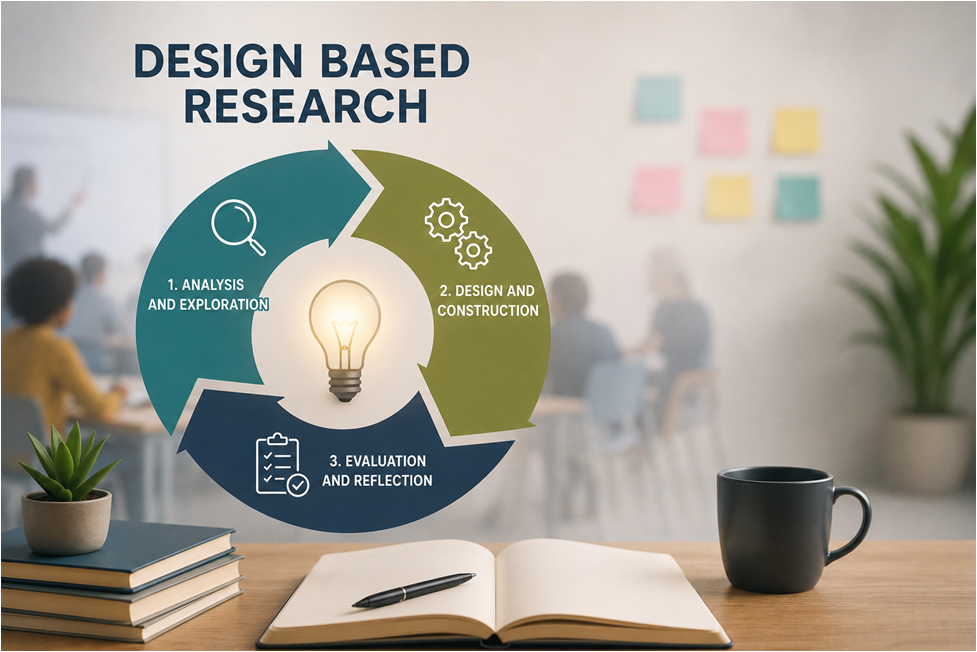
Looking back, we can see how our work followed three natural phases:
· Understanding the problem by listening to real experiences of teachers, students and parents
· Designing and trying solutions that made sense for our specific context
· Reflecting and improving based on what we observed in real classrooms
But these phases didn’t feel rigid or academic. They felt like a continuous loop of learning; just like we hope students experience.
A Shift in Mindset
More than anything, Design-Based Research changed how we think about improvement.
We stopped asking, “What’s the best solution out there?”
And started asking, “What works here, for teachers and students, right now—and how can we make it better?”
That shift made all the difference.
It reminded us that meaningful change doesn’t come from importing perfect ideas. It comes from building, testing, and refining ideas together.
Final Thoughts
Choosing Design-Based Research wasn’t about following a trend or adopting a new framework.
It was about acknowledging the reality of diverse and inclusive classrooms—and choosing a path that respected their complexity.
It gave us a way to move forward thoughtfully, collaboratively, and continuously.
And perhaps most importantly, it reminded us that improving education isn’t a one-time effort.
It’s an ongoing process; one that works best when everyone has a voice, and when every step forward is shaped by real experience.
Stay tuned as we continue to share the findings of our research in each stage of the Design Based Research process.